
Betting Payment Methods in Kenya: M-Pesa, Airtel and More
Kenyan betting sites licensed by the Gambling Regulatory Authority (GRA) offer four ways to pay: M-Pesa Paybill, Airtel Money, bank transfer and debit card. This guide compares them for deposits and withdrawals in KSh and shows what to check before you pay. Betting is for adults only, and this guide is written for readers aged 18+.
GRA-Licensed Betting Sites in Kenya: Payment Options Compared
In bettingsitesinkenya.net we will present you with the best payment methods for betting sites and online casinos in Kenya and the best practices for depositing and withdrawing in KSh.
 Mozzart bet
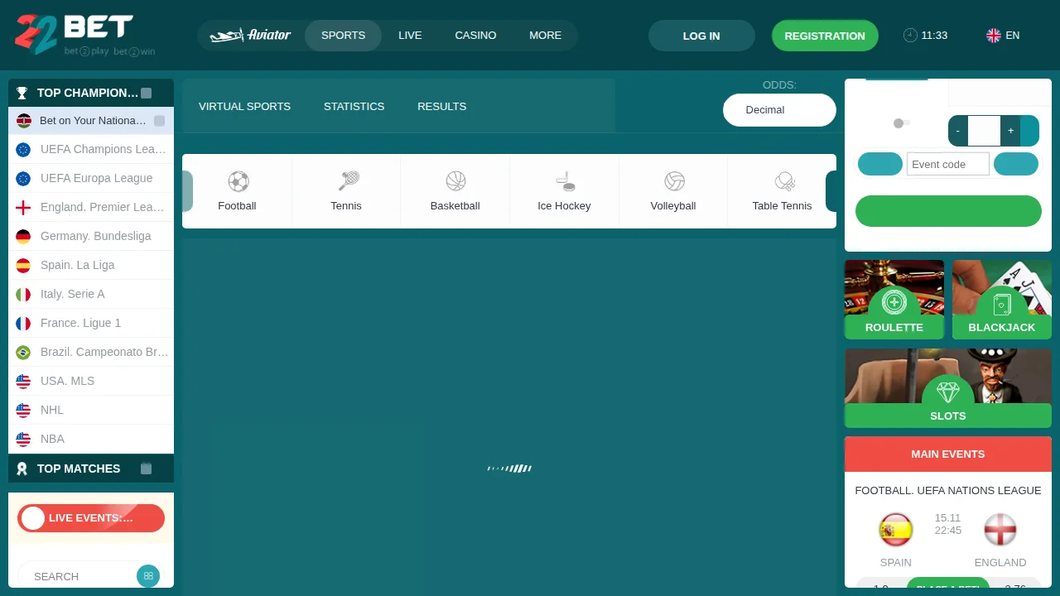
 22bet
- Megapari


- Betsafe
- 1xbet
- Melbet


- Betwinner
 Dafabet
 Cyberbet
 Betika
 Bet365

- 888Sport
- Betpawa
- Betway
- Odibets
- Palms Bet
- Shabiki
- Sportpesa
- Sportybet
- Sportaza
- N1bet
 MrPlay





































Betting payment methods in Kenya come down to four options at sites licensed by the Gambling Regulatory Authority (GRA): M-Pesa (Paybill), Airtel Money, bank transfer and debit card. Under the Gambling Control Act, 2025, only GRA-licensed operators make this guide, every player must prove they are an adult, and the regulator can receive, investigate and arbitrate complaints.
In short:
- 🏛️ Regulator: Gambling Regulatory Authority (GRA), which replaced the BCLB, with the formal transfer completed in February 2026
- 📜 Law: Gambling Control Act, 2025, in force since 26 August 2025, which repealed Cap. 131
- 🔞 Age: adults only, with proof of age before registration
- 📱 Main methods: M-Pesa Paybill, Airtel Money, bank transfer, debit card
- ⚖️ Complaints: the GRA has a legal mandate to investigate and arbitrate disputes
- ✅ Ranking rule: no GRA licence means no place on our list
GRA-licensed betting sites: what the licence means for your money
Every payment method in this guide matters only if the site behind it is licensed. The GRA licenses both the people and the companies that offer gambling in Kenya. That licence is the filter for our ranking, and it changes what you can do when a deposit goes missing or a withdrawal stalls.
- A regulator to escalate to: if the operator’s own complaints process fails, the GRA can receive, investigate and arbitrate your complaint.
- A named, accountable company: the licence is issued to an identifiable business that answers to a Kenyan authority, not to a faceless website.
- Age checks at the door: licensed operators must see proof that every account holder is an adult, which is why sign-up asks for your ID details.
- Responsible gambling duties: the Gambling Control Act, 2025 places obligations on licensees, including tools that let you limit or stop your play.
What the licence does not do
A licence is not a guarantee that every bet settles the way you expect or that every withdrawal lands instantly. It gives you a route to a decision-maker outside the operator. Mobile money reversals still go through Safaricom or Airtel, card disputes still go through your bank, and the GRA deals with the gambling operator’s conduct.
The trade-offs of a local licence
Playing under a Kenyan licence has a cost, and you will notice it:
- Stricter verification: withdrawals can be held until your name, ID and mobile money number match.
- Operator-set limits: minimum and maximum deposits, stakes and payouts are set per site and can feel tight on bigger bets.
- Smaller catalogue: some games and markets available on unlicensed sites are not offered locally.
- Tax handled by the operator: Kenyan gambling taxation applies to licensed sites, so check the operator’s terms to see how it affects stakes and winnings.
Pro tip: Before your first deposit, scroll to the footer of the betting site and find its GRA licence details. If a site only shows a foreign licence, or none at all, the complaint route described above is not available to you.
Kenya betting payment methods compared: M-Pesa, Airtel, cards, bank
Each method suits a different kind of player. The table sums up how they work in practice at GRA-licensed sites.
| Method | How you pay | Best for | Watch out for |
|---|---|---|---|
| M-Pesa (Paybill) | Paybill number plus account reference, or STK push prompt on your phone | Everyday deposits and fast withdrawals to your line | Wrong account reference sends money to the wrong place |
| Airtel Money | Pay bill via the Airtel Money menu or app, or prompt from the site | Airtel subscribers who want mobile money without switching lines | Fewer sites support it than M-Pesa |
| Debit card | Card number, expiry and CVV on the cashier page | Players who bank with Visa or Mastercard and want a paper trail | Some banks decline gambling transactions |
| Bank transfer | Transfer from your bank to the operator’s account details | Larger, planned deposits and withdrawals | Slower than mobile money; reference must be exact |
M-Pesa at Kenyan betting sites: Paybill and STK push
M-Pesa is the default for most Kenyan bettors because the money moves from the phone you already carry. Licensed sites usually give you two ways to pay: an STK push, where a prompt pops up on your phone, or a manual Paybill payment from the M-Pesa menu.
Paying a betting site by M-Pesa, in short
You start from the site’s cashier, choose M-Pesa and either approve the prompt that arrives on your phone or pay the Paybill number shown, using the account reference the site gives you, usually your phone number or account ID. The confirmation SMS is your receipt, and your betting balance should update before you place a bet.
The full walk-through, with both payment routes, M-Pesa withdrawals, the checks to make before you bet and the bookmakers that support it, is in our guide to betting sites with M-Pesa.
Worked example: tracking a KSh 1,000 deposit
Say you deposit KSh 1,000 by Paybill and place five bets of KSh 200 each. Keep the M-Pesa confirmation code from the SMS. If only KSh 800 appears in your account, that code is your proof when you contact support, and later the GRA if the operator does not resolve it. Remember that M-Pesa charges its own transaction fees, so the amount leaving your wallet can be higher than the KSh 1,000 credited.
Pro tip: Register your betting account with the same phone number as your M-Pesa line. Withdrawals at licensed sites typically go back to the registered number, and a mismatch is one of the most common reasons a payout is held for verification.
STK push or manual Paybill: which is better?
Both end up in the same place, but they differ in where errors can creep in:
- STK push: the site fills in the business number and reference for you, so you only enter your PIN. Fewer typing errors.
- Manual Paybill: useful when the prompt does not arrive, but you type every detail yourself, so double-check the account reference.
Airtel Money betting payments: how it differs from M-Pesa
Airtel Money works in a similar way to M-Pesa: you pay a business number from your phone and the operator credits your account. The main difference is coverage, because not every licensed site supports it, so check the cashier before you sign up.

- Deposits: open the Airtel Money menu or app, choose the pay bill option, enter the operator’s business number and your account reference, then confirm with your PIN.
- Withdrawals: where supported, winnings go back to your registered Airtel line.
- Fees: Airtel applies its own tariffs, separate from anything the betting site charges.
- Dual-SIM players: keep one line as your registered betting number to avoid mismatches at withdrawal.
Debit cards at Kenyan betting sites: Visa and Mastercard
Cards are less common than mobile money in Kenya but useful if you prefer keeping gambling spend on a bank statement. Licensed operators process card payments through the cashier page, and your bank decides whether to approve a gambling transaction.
Card deposits: what to check first
- Bank policy: some Kenyan banks block gambling merchants on certain cards; call your bank if a payment is declined.
- Name match: the cardholder name must match your betting account, or the deposit may be rejected.
- No credit cards: the Gambling Control Act bars licensed operators from helping you bet with a credit card or with advanced credit, so the card you use should be a debit card.
- Withdrawals: payouts to cards are not always available, and many sites send winnings to mobile money or bank instead.
Bank transfer betting deposits and withdrawals in Kenya
Bank transfers are the slowest route but suit larger amounts and players who keep their betting budget in a separate account. Most Kenyan banks let you pay a betting operator’s Paybill straight from your banking app, or send money to the operator’s account by bank transfer.
- Best for: larger withdrawals you want to land directly in your bank account.
- Reference matters: always use the account number or phone number the site gives you, or the payment may not be matched to your account.
- Timing: transfers can take longer than mobile money, especially at weekends and on public holidays.
- Charges: your bank’s own fees apply, so check its tariff before moving money.
When a bank transfer makes sense
Use a bank transfer when a mobile money payment would go over your wallet’s transaction or daily limit, or when you want your betting money kept away from the M-Pesa balance you use every day. That separation makes it easier to see what you have spent.
Pro tip: open a separate bank or mobile wallet used only for betting. When it is empty, you stop for the month. This is the simplest budget control there is, and it works on any licensed site.
How to withdraw betting winnings in Kenya: step by step
Withdrawals at GRA-licensed sites normally go back to the mobile money number registered on your account. Follow these steps to avoid delays:
- Verify your account first. Make sure your ID and phone number are confirmed before you request a payout.
- Check that the numbers match. The M-Pesa or Airtel Money line must be registered in the same name as your betting account.
- Open the withdrawal page. Choose your method and enter the amount.
- Confirm the request and keep the transaction reference.
- Watch for the SMS. Your mobile money provider confirms the money once it arrives.
- Escalate if it stalls. Contact the operator’s support with the reference; if that fails, the licence gives you a route to the regulator (see below).
Worked example: a KSh 5,000 win
You deposit KSh 1,000, place several bets and your balance reaches KSh 5,000. Here is how to keep track of it:
| Step | Amount | What to record |
|---|---|---|
| Deposit via M-Pesa | KSh 1,000 | M-Pesa SMS code |
| Balance after bets | KSh 5,000 | Screenshot of account balance |
| Withdrawal request | KSh 5,000 | Site withdrawal reference |
| Amount received | As shown in SMS | Compare with request; any gap should match the deductions shown on the site |
If the amount received differs from what you requested, the site’s transaction history should explain every deduction. If it does not, ask support in writing.
Betting payment fees and limits under a local licence
A GRA licence comes with rules that shape how much you can move and stake. Players do notice these limits, and it is better to know them before you sign up.

| Limit type | Who sets it | What you will feel |
|---|---|---|
| Mobile money transaction limits | Safaricom / Airtel | Caps on single and daily transfers |
| Deposit and stake limits | Operator, within the local framework | Lower ceilings than some offshore sites |
| Bank charges | Your bank | Fees per transfer or card payment |
| Game catalogue | Operator, within its licence | Fewer titles or markets than unlicensed sites |
Taxes on betting in Kenya
Betting in Kenya is taxed, and licensed operators handle the deductions on your behalf. The site’s terms and your transaction history show what is applied to stakes or winnings, so check both before you bet.
Payment disputes with GRA-licensed sites: your options
This is where the licence earns its keep. The regulator has a legal mandate to receive, investigate and arbitrate complaints about betting, gaming, lotteries and casinos.
- Step 1: raise the issue with the operator’s support and keep the reference number.
- Step 2: collect evidence: M-Pesa SMS codes, screenshots, dates and amounts.
- Step 3: if the operator does not resolve it, file a complaint with the Gambling Regulatory Authority.
What the regulator cannot do is turn a lost bet into a win or reverse a payment you made correctly. It looks at whether the operator followed the rules. A mistake you made yourself, such as typing the wrong account number, is a matter between you and your mobile money provider or bank.
Pro tip: save every M-Pesa confirmation SMS from betting payments in a dedicated folder or note. In a dispute, that code is the single strongest piece of evidence you have.
Common betting payment mistakes to avoid in Kenya
- Wrong Paybill or account number: money sent to the wrong business number is hard to recover.
- Using someone else’s line: withdrawals often fail when the mobile money name does not match the betting account.
- Skipping verification: leaving ID checks until you want a payout causes delays.
- Paying unlicensed sites: outside the GRA framework, you lose the complaint route to the regulator.
- Using credit to bet: borrowing to gamble turns a loss into debt.
- Chasing losses: topping up after a bad run is the fastest way to break a budget.
Responsible gambling tools linked to your payments
Betting is for adults only, and this guide is written for readers aged 18+. Licensed operators must check your age and identity, which is one reason verification is required before you withdraw.
- Deposit limits: set daily, weekly or monthly caps in your account settings.
- Self-exclusion: the licensing framework provides for self-exclusion so you can step away from betting.
- Cooling-off periods: take a short break without closing your account.
- Transaction history: review your deposits and withdrawals each month.
Pro tip: set your deposit limit on the day you open the account, not after a losing week. Limits set in a calm moment are the ones that hold.
How to judge a betting site’s payments before you sign up
The first filter for any list of Kenyan betting sites is the licence: no GRA licence, no place on the list. Once that box is ticked, the differences between licensed sites come down to how they handle your money. Before you register anywhere, judge the cashier against a short set of questions.
- Licence first: is the operator licensed by the Gambling Regulatory Authority (GRA) under the Gambling Control Act, 2025? If you cannot confirm this, stop there.
- Local methods: does the cashier offer M-Pesa Paybill and Airtel Money, or only cards and bank transfer?
- Same route in and out: can you withdraw to the method you deposited with, or does the site push you to a different one?
- Clear limits: are minimum and maximum deposit and withdrawal amounts shown in KSh before you pay, not after?
- Clear charges: does the site say whether it charges anything, separately from what Safaricom, Airtel or your bank may charge?
- Verification rules: does it explain which documents it needs and when it will ask for them?
- A complaints route: does it explain its own complaints process and say that you can escalate to the GRA?
A site that answers all of these in its help pages or terms is easier to deal with when something goes wrong. A site that hides them behind live chat or vague wording is telling you something too.
Tip: read the cashier and payment terms before you deposit. Changing your mind after your money is in the account is always harder than walking away before it.
Payout speed: what really decides how fast you get paid
“Instant withdrawals” is one of the most common promises in Kenyan betting, but the speed of a payout depends on several steps, and only some of them are in the operator’s hands. Understanding each stage helps you work out where a delay is coming from and who to ask about it.
| Stage | What happens | What can slow it down |
|---|---|---|
| 1. Withdrawal request | You ask for a payout from your betting balance in KSh | Amount below the site’s minimum or above its maximum; unsettled bets still open |
| 2. Account checks | The operator checks that your account is verified and that you are an adult | Missing ID details; name on the account not matching your mobile money or bank name |
| 3. Bonus and wagering checks | The site confirms that no bonus conditions block the withdrawal | Wagering requirements not yet met on a bonus you accepted |
| 4. Operator approval | The payment is approved and sent to M-Pesa, Airtel Money, card or bank | Manual review of larger amounts; requests made outside the site’s processing hours |
| 5. Provider processing | Safaricom, Airtel or your bank credits your account | Network or bank delays; card refunds and bank transfers usually take longer than mobile money |
How to keep your own withdrawals moving
Most avoidable delays happen at stages 2 and 3, which means the bettor has some control over them.
- Complete verification as soon as you open the account, not on the day you want to withdraw.
- Register with the same name and phone number that your M-Pesa or Airtel Money line uses.
- Check whether a bonus is active on your account before requesting a payout.
- Keep your M-Pesa or Airtel confirmation messages and the site’s transaction references.
- If a payout is late, ask the operator which stage it is at; that tells you whether the delay is theirs or the provider’s.
Fast payouts matter, but a site that pays quickly and correctly every time is worth more than one that pays instantly once and then freezes your account at the next request.
Registering and verifying before your first deposit
Sign-up at a GRA-licensed site can be quick, but the part that matters for your money is verification. Licensed operators must confirm that every account holder is an adult, and the checks they run at sign-up are the same checks that decide whether a withdrawal goes through later.
What you will usually be asked for
- Your full name, exactly as it appears on your ID.
- ID details, so the operator can confirm your identity and your age.
- Your mobile number, which for most Kenyan bettors is also the M-Pesa or Airtel Money line used for payments.
- A password and security details to protect the account.
Sign-up details that cause payment trouble later
Small inconsistencies at registration often only show up when you try to withdraw. Avoid these:
- Using a nickname or a shortened name that differs from your ID.
- Registering with a family member’s phone number because it has more M-Pesa balance.
- Opening a second account at the same site after forgetting the password to the first.
- Typing your ID number in a hurry and not checking it before submitting.
Remember: the law requires proof of adult age (18 in Kenya) before an account is opened. An account opened by someone underage, or in someone else’s name, is a problem for the account holder, not just for the operator.
The best payment method for each type of bettor
There is no single best method for everyone. The right choice depends on how much you stake, how often you bet and which accounts you already use. The table below matches common bettor profiles with the method that usually fits them best at GRA-licensed sites, using the four options available: M-Pesa Paybill, Airtel Money, bank transfer and debit card.
| Type of bettor | Method that usually fits | Why | What to watch |
|---|---|---|---|
| Casual bettor with small stakes | M-Pesa Paybill | Works from almost any phone, and confirmations arrive by SMS | Typing the correct Paybill and account number |
| Airtel line as main wallet | Airtel Money | Avoids moving money between networks before betting | Confirm that the site pays withdrawals back to Airtel Money |
| Bettor who wants a paper trail | Bank transfer | Every movement appears on your bank statement | Slower processing and bank cut-off times |
| Bettor without mobile money | Debit card | Uses an existing bank account without a mobile wallet | Some cards decline gambling transactions; withdrawals may take longer |
| Bettor trying to control spending | Debit card or M-Pesa from a set budget | Spends money you already have, not borrowed money | No credit cards (the law bars them) and no loan-funded deposits |
| Bettor with larger withdrawals | Bank transfer | Better suited to amounts above mobile money limits | Extra verification checks on bigger payouts |
Many bettors use more than one method. That is fine, as long as every account in the chain is in your own name and you know which method each withdrawal will go back to.
Bonuses and payment methods: reading the terms before you deposit
A bonus is only “real” if you understand its conditions before you accept it. Bonus terms affect your payments directly: they can decide which deposit counts, how much of your balance you can withdraw and when. This guide does not list specific offers, because promotions change and the terms on the operator’s own site are the ones that apply.
Terms that affect your money
- Qualifying deposit: does the offer apply to M-Pesa, Airtel Money, card and bank deposits equally, or only to some of them?
- Minimum deposit: is there a minimum amount in KSh to qualify?
- Wagering requirements: how many times must the bonus or deposit be staked before you can withdraw?
- Minimum odds: do only bets above certain odds count towards the requirement?
- Time limits: how long do you have to meet the conditions before the bonus expires?
- Withdrawal effect: does requesting a withdrawal cancel the bonus or any winnings linked to it?
When it makes sense to say no
If you plan to withdraw soon after a win, a bonus with heavy wagering can lock your balance for longer than you want. Declining an offer is often the simplest way to keep your money flexible. A licensed site should let you opt out or play without a bonus.
Check: if a withdrawal is refused because of a bonus, ask the operator which specific term applies. If you believe the term was not shown clearly, the operator’s complaints process comes first, and the GRA can receive, investigate and arbitrate the complaint if that fails.
Football, other sports and Aviator: the payment angle
Most Kenyan bettors fund their accounts to bet on football, with other sports and crash-style games such as Aviator often available in the same account. Whatever you bet on, the money comes from the same wallet, so the payment rules in this guide apply to every market on the site.
Live betting and in-play deposits
In-play football markets move quickly, and that creates pressure to deposit mid-match. This is where many payment mistakes happen:
- Rushing a manual Paybill payment and typing the wrong account number.
- Depositing more than planned because a match is still running.
- Topping up repeatedly to chase a losing bet.
A better habit is to fund your account before kick-off with the amount you have set aside, and treat that balance as your limit for the match.
Fast games and spending control
Fast rounds, such as those in Aviator, can use up a balance much more quickly than a football accumulator settled over a weekend. If you use these games, the responsible gambling tools linked to your payments, such as deposit limits, matter even more. Set them before you play, not after a bad session.
Finding good bets without overspending
Comparing odds across licensed sites can be worth it, but holding funded accounts at many operators spreads your money thin and multiplies verification checks. Keeping one or two well-verified accounts usually makes deposits and withdrawals smoother.
Using M-Pesa and Airtel Money on the same betting account
Some bettors have both a Safaricom and an Airtel line and want to use both at the same site. Whether that works depends on the operator’s cashier and verification rules, so check before you mix methods.
- Name match: both mobile money lines should be registered in the same name as your betting account. Withdrawals can be held until your name, ID and mobile money number match.
- Registered number: many sites link withdrawals to the phone number on the account. A second line may need to be added or verified separately.
- Withdrawal route: ask which method a withdrawal will go to if you deposited using both.
- Record keeping: keep the confirmation SMS from each network, since Safaricom handles M-Pesa reversals and Airtel handles Airtel Money reversals.
If the site does not explain how it handles two mobile money lines, the simplest choice is to pick one for both deposits and withdrawals. One route in and one route out makes any dispute much easier to trace.
How to check the facts in this guide yourself
You should not have to take any betting guide on trust, including this one. The key facts about betting payments in Kenya can be checked against official sources and the operator’s own documents.
- The regulator: the Gambling Regulatory Authority (GRA) replaced the BCLB, with the formal transfer completed in February 2026. It licenses the people and companies that offer gambling in Kenya.
- The law: the Gambling Control Act, 2025, in force since 26 August 2025, repealed the Betting, Lotteries and Gaming Act, Cap. 131, which dated from 1966.
- The age rule: operators must see proof of age of majority, which is 18 in Kenya, before registering anyone.
- Complaints: the regulator has a legal mandate to receive, investigate and arbitrate complaints about lotteries, gambling, betting and casinos.
Verifying an individual operator
Before you deposit, look at the site’s terms and footer for the name of the licensed company and its licence details. If they are missing or unclear, ask customer support directly and confirm the answer with the GRA. A legitimate operator should have no problem telling you which company holds its licence.
Bottom line: a licensed site, a payment method in your own name and a record of every transaction are the three things that protect your KSh more than any promotion or payout promise.
Betting payment methods in Kenya: FAQ
Which is the most common betting payment method in Kenya?
M-Pesa through Paybill is the most widely used, followed by Airtel Money. Cards and bank transfers are also available at many sites. Our guide to M-Pesa betting sites covers it in depth.
Can I withdraw winnings to someone else’s M-Pesa number?
Usually not. Withdrawals go to the number registered and verified on your own account, in your own name.
What happens if I send money to the wrong Paybill?
Contact Safaricom immediately with the transaction code. The betting site cannot credit a payment it never received.
Does a GRA licence guarantee I will get my money?
No licence guarantees outcomes. It gives you a regulator that can receive, investigate and arbitrate complaints about how the operator handled your account and payments.
What law regulates betting payments in Kenya?
The Gambling Control Act, 2025, in force since 26 August 2025, which repealed the Betting, Lotteries and Gaming Act (Cap. 131). The Gambling Regulatory Authority replaced the BCLB as the regulator.
What is the minimum age to bet in Kenya?
The law requires a licensed site to see proof of age of majority, which is 18 in Kenya, before it opens your account.